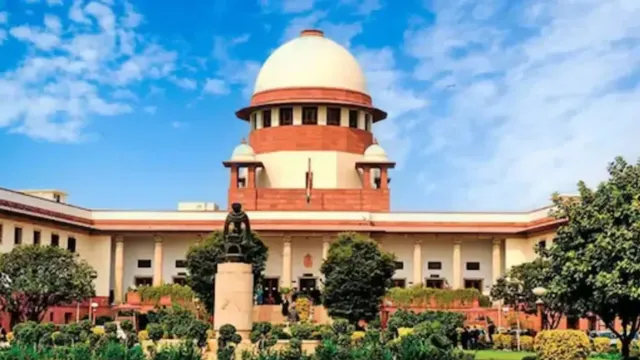
Supreme Court Rules Grandson Cannot Claim Birthright In Partitioned Ancestral Property
The Supreme Court has ruled that a grandson cannot claim a birthright in his grandfather's property once it has been partitioned among legal heirs. The bench clarified that once the property is transferred under the Hindu Succession Act, 1956, the share received by the father becomes his <b>personal property</b>. Justices Augustine George Masih and Sunita Agarwal dismissed a 1997 partition suit filed by a minor grandson. The court noted that under Section 8 of the Act, the property devolved upon the first-class heirs, excluding others. Consequently, the grandson lacks a <b>legal claim</b> to the share sold by his father. The dispute involved a 1,811-square-foot property in Chennai. After a 1994 settlement decree, the father received a portion of the land, which he subsequently sold in 1997. The court's decision reinforces that birthright claims do not apply to property that has already undergone <b>legal partition</b> and transfer to individual heirs.
This page is a shareable card. Download our app to get the full swipe experience!