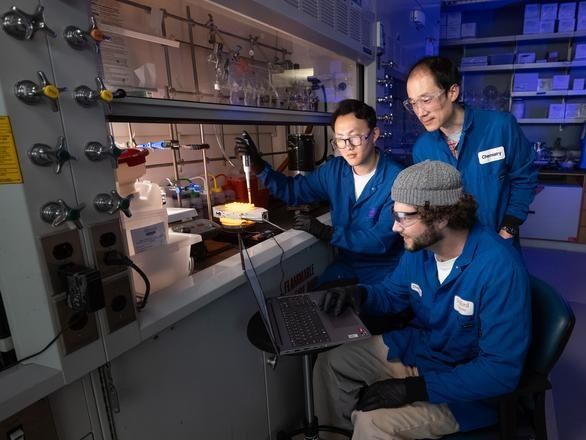
Stanford Researchers Develop Tiny Wireless Chips to Monitor Chemical Reactions
Researchers at Stanford University have developed grain-sized wireless chips capable of monitoring chemical reactions in real-time. These microelectronic sensors, placed directly inside test tubes, track <b>temperature and heat exchange</b>, transmitting data wirelessly to computers every half-second. This innovation replaces traditional, slow sampling methods, allowing scientists to gather thousands of data points per reaction. By providing immediate insights, the technology helps researchers identify catalyst poisoning and prevent overheating, significantly accelerating the discovery of new drugs and materials. This interdisciplinary breakthrough, published in the journal Science, offers a cost-effective, nonintrusive way to optimize complex chemical experiments in high-throughput laboratory settings.
This page is a shareable card. Download our app to get the full swipe experience!